
From financial reporting to bounded actions
Stripe announced Treasury for agents on October 21, describing a way for eligible startups to use agents such as ChatGPT and Claude in financial operations. The company says an agent can check balances, pay invoices, transfer money between accounts and convert currencies. Stripe’s announcement describes the product as a means to delegate repetitive tasks, not as an autonomous bank account that an AI can operate without business rules.
The announcement also explains that businesses choose which accounts and data an agent can access, whether it may read information or take action, and when a person must approve money movement. Stripe says its Model Context Protocol (MCP) server lets agents interact with Stripe APIs and data. In practice, the model is one interface in a permissioned system; account eligibility, API scopes, user approvals and the underlying financial-service terms still matter.
What the October announcement did and did not include
The initial announcement names balance checks, invoice payments, transfers and currency conversion. It said card creation and agent spending limits would follow in the coming weeks. Stripe’s broader Treasury pages may describe card and spending-control features for Treasury generally, but that should not be read as proof that every agent-specific capability is live for every account. The current MCP documentation labels several Treasury tools as public preview, including balance summaries, currency conversion, sending money, recipient setup and transfers.
Access is not universal. Stripe’s help material says Treasury is gradually rolled out to eligible users and determined account by account. Businesses should check the dashboard and the current product documentation for their region, account and enabled permissions. The availability of an MCP tool in documentation does not by itself establish that a business has Treasury access, that a transaction type is supported for its territory, or that a given action can run without approval.
Separate reading, preparation and execution
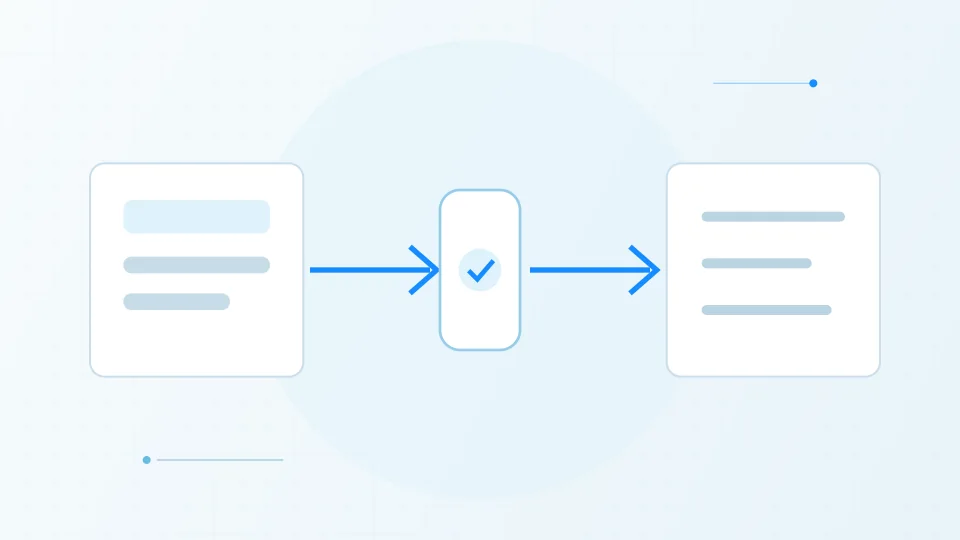
A useful deployment design separates three levels: read-only reporting, preparing an action for review, and executing an approved action. A balance summary may be low impact; choosing a recipient, amount and date for a payment is more consequential; releasing funds is an external action with financial and operational effects. Teams should grant only the minimum access needed, test in a sandbox where available, and define who can authorize a live transfer.
Human approval is not merely a confirmation button. The approver should be able to see the recipient, amount, currency, source account, invoice or business reason, and any validation warnings before release. Make logs attributable to the agent and the human, set transaction limits outside the model’s own instructions, and establish alerts and a rapid revocation path. Where duties are separated across finance roles, preserve those controls instead of allowing an agent to collapse them for convenience.
MCP adds an integration surface to secure
MCP standardizes how a compatible agent can discover and call tools, but it does not decide whether a particular action is appropriate. Stripe’s own MCP guidance recommends enabling tool approval in the client and warns about prompt-injection risk when combining servers. A malicious or misleading instruction in a document or connected system could try to steer an agent toward an unintended tool call. Treat tool descriptions, connected content and model instructions as part of the threat surface.
Before a pilot, review authentication, live-versus-sandbox account selection, OAuth sessions or agent keys, allowed tools, data visibility, logs, rate limits and recovery procedures. Prefer revocable, narrowly scoped credentials and explicit approvals for transfers and payments. Reconcile activity against the financial ledger and test ambiguous invoices, duplicate requests and changed vendor details. These are ordinary payment-control practices applied to a new software actor.
Stripe is a financial technology provider, not the bank
Stripe’s Treasury materials state that Stripe is not a bank and that banking services are provided by partner financial institutions, with the named institution and terms varying by service and region. Availability, safeguarding or deposit-insurance treatment also depends on the product, country and applicable terms. A business should not infer that the word “Treasury” means a conventional bank account or that funds receive identical legal treatment everywhere.
The measured opportunity is less time spent on routine financial administration, provided the business can preserve control, auditability and separation of duties. Start with a read-only cash-flow summary, validate it against the dashboard, then consider a narrowly scoped action that requires approval. The agent should never be the only control over payment data or authorization. Check current eligibility and terms before planning around a feature described as preview or forthcoming.
Sources & further reading
Have a factual correction or a source to suggest? Contact the editorial desk.