
Agents are moving into the Zap editor
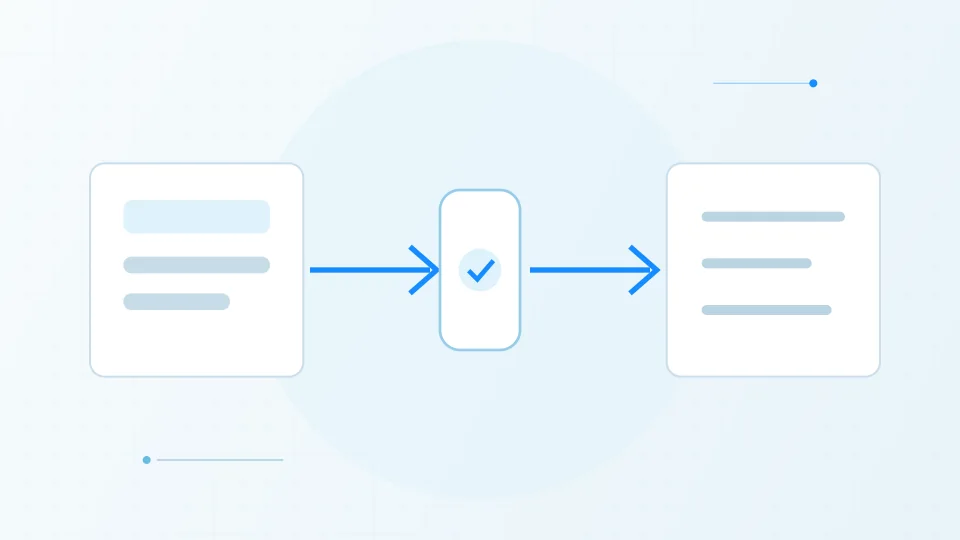
In an October 6 product update, Zapier said that capabilities from its standalone Agents product are moving into an AI by Zapier step in the Zap editor. The company describes the earlier agent as a prompt, a set of tools, a trigger and permission to act. In the new arrangement, those pieces sit inside a Zap and can use the platform’s existing triggers, filters, paths and run history.
This is a product migration, not a claim that every Agents feature has already moved unchanged. Zapier says most capabilities carry over, while some knowledge sources are not yet supported and a few features are still rolling out. Existing customers should use the migration guidance for their account and test the recreated workflow rather than assume automatic parity.
Why placing an AI step inside a workflow matters
A workflow can combine an AI step with ordinary deterministic steps. For example, a model might classify an incoming request, while fixed rules route it to a queue and a human approves any customer-facing response. Zapier says tool approvals can be configured per action, model tiers can be selected, and structured fields can be returned for downstream mapping.
Keeping rules around the model makes it easier to decide which parts require judgment and which should behave predictably every time. The AI step can handle ambiguity or language-heavy work; ordinary conditions and actions can enforce required fields, thresholds and handoffs. That separation is often more maintainable than asking a model to follow every procedural rule in one long prompt.
Oversight, history and operating cost
Zapier says runs appear in Zap History with tool calls, inputs, outputs, model tier and tasks consumed. It also describes approval controls before individual tools run and a configurable task cap; its article says a run exceeding 75 tasks currently pauses for a person, with that limit expected to change. These details can help teams understand what happened and catch runaway work, but teams still need to configure and monitor their own account.
The pricing model matters because AI steps consume tasks, with different model tiers using different multipliers. Estimate activity using real examples, including retries and exceptional cases. A workflow that looks inexpensive in a short demo may have different economics when it processes a busy inbox or repeatedly calls tools. Set limits, track usage and define an owner who reviews unexpected consumption.
Where deterministic automation remains the better fit
Not every automation needs an agent. If the input is structured and the decision is a clear rule, a conventional trigger-condition-action flow is easier to test and explain. Use an AI step where unstructured text, classification or flexible reasoning adds value, then hand the result to explicit rules for validation and routing.
This division is especially important for payments, access changes, legal notices and other actions with consequences. A model can prepare a recommendation or draft; a deterministic check or human approval can be required before a write action. The right boundary depends on the process, data quality and impact of an error, not on whether an agent can technically call a tool.
A measured migration plan for small teams
Inventory existing agents, triggers, connected apps, knowledge sources, approvals and expected task volume. Pick one low-risk workflow to migrate, compare its outputs against the original and check edge cases such as missing fields, duplicate events and unavailable tools. Confirm that the workflow owner can see the run history and knows how to pause or roll back the automation.
Zapier’s change brings agent-style reasoning closer to the familiar workflow builder, where guardrails and ordinary actions can coexist. For small businesses, that can reduce fragmentation if the migration fits their use case. It is still an implementation choice: use AI selectively, keep core business rules explicit and retain a human path for uncertain or consequential cases.
Sources & further reading
Have a factual correction or a source to suggest? Contact the editorial desk.