First decide: local, hosted or API?
A hosted service is the easiest way to start, but free quotas, available models and terms change often. Check the current plan before depending on a free feature. Downloadable weights may have no license fee, but they require compatible hardware, storage, power and setup time.
Local inference can provide more control over the data path, not an automatic privacy guarantee. Review the runtime, interface and external connections. For an API, compare price, retention, commercial terms, processing location and request limits. Open weights do not make the service hosting them free.
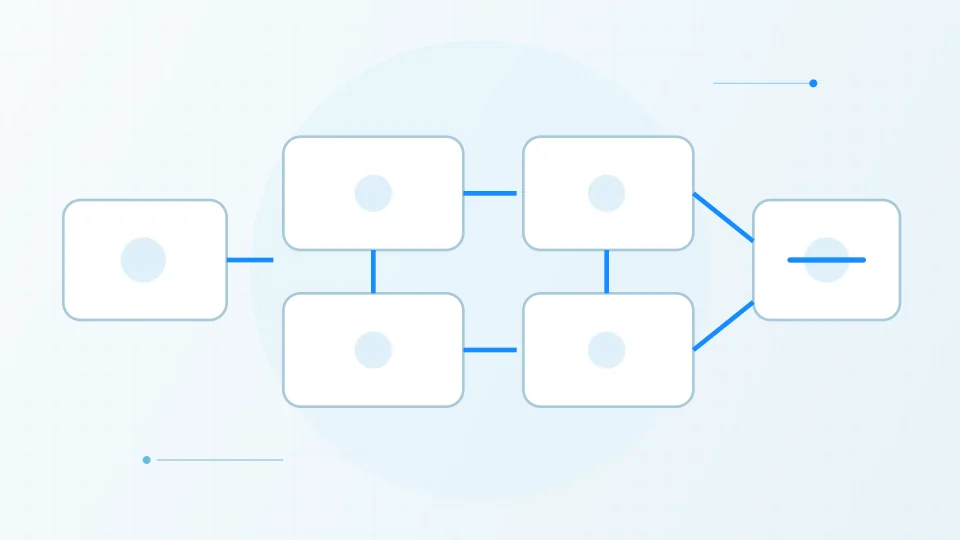
A practical model-selection path
Start with the task and deployment boundary. Hardware class is a check, not a performance score; license and service terms still need review.
Use case
Choose chat, coding, document work or multilingual testing.
Access route
Decide between local weights, a hosted free tier or a paid API.
Hardware class
Check the exact variant, quantization, context and runtime on the target device.
License and data
Verify checkpoint terms and where prompts and files are processed.
Same-task trial
Compare a few options on identical examples and review the full cost.
For a laptop with limited resources
Start with a variant suited to your hardware and a well-supported runtime, then measure memory use and speed on your device. Qwen3.8-27B is a 27-billion-parameter checkpoint whose model card lists about 55.6 GB of files, so it is not a lightweight choice for an ordinary laptop. Gemma has multiple variants. Quantization and loaded context also change resource needs.
If the machine struggles, reduce context or try a smaller model before buying hardware. A slower response may be fine for occasional summaries but unsuitable for interactive coding. No configuration works the same across every chip, operating system and runtime.
Comparison to guide a trial
| Option | Access and license | Local? | May fit when |
|---|---|---|---|
| Gemma 4 | Downloadable weights; Apache 2.0 for cited releases | Yes; requirements vary | You want a local trial under a permissive license |
| Qwen3.8-27B | Apache 2.0 for this checkpoint | Possible; substantial hardware required | You have suitable hardware for multilingual evaluation |
| Mistral Small 4 | Apache 2.0 weights; hosted API may cost money | Possible; full model needs substantial infrastructure | You have infrastructure for multimodal testing |
| Llama 4 | Meta community license | Yes, within the stated terms | You can review the specific conditions |
“Free” here mainly refers to downloadable weights, not hardware, power or hosted service. This is not a benchmark or ranking.
For coding, languages and documents
For coding, compare a code-oriented model with a general model on real tasks: explain a repository, propose a narrow change and diagnose a failed test. Mistral Small 4 describes coding and reasoning among its uses; Qwen and Gemma support different workflows. Those descriptions do not establish which model is most accurate for your stack.
For multilingual work and documents, prepare examples in the languages and formats you actually use, and verify PDF or image support. For long documents, check the exact version’s context limit and whether a service truncates content. Evaluate citations and omissions, not just fluent wording.
Choose without chasing a leaderboard
Define your criterion first: predictable cost, local execution, speed, language, commercial license or quality on a specific task. Test two or three options with the same inputs and assess correctness, review time, latency and total cost. A synthetic benchmark is not a substitute for a task-specific test.
Record the model ID, license and date checked. Releases, free quotas and requirements change. For commercial use, verify both the checkpoint’s terms and the service terms before integrating it.
Sources & further reading
Have a factual correction or a source to suggest? Contact the editorial desk.